

Yesteryear by Caro Claire Burke

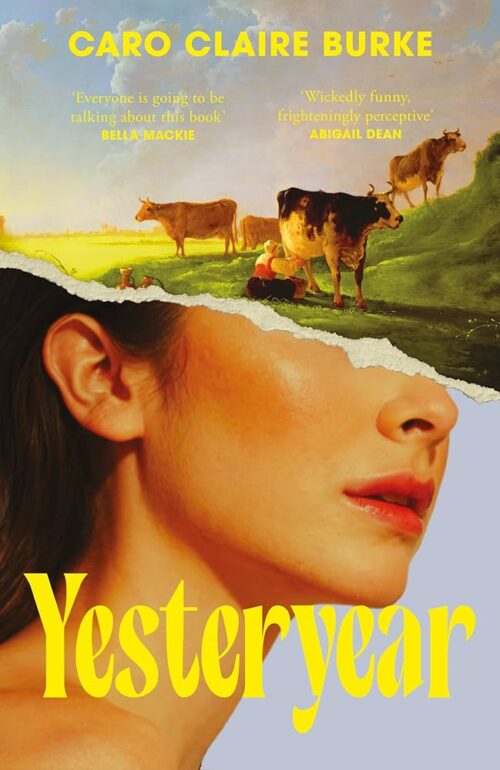
There is something deeply satisfying about a book that asks you to sit with someone you don’t particularly like. I felt this way when I read My Year of Rest and Relaxation or Dune or The Glutton. To add to this pile of books I really do love, I’ve got Yesteryear.
Caro Claire Burke’s Yesteryear succeeds precisely because it resists the urge to soften its protagonist or make her immediately redeemable. Instead, our main character has flaws that are often frustrating, with a worldview can feel painfully narrow. Each decision made me want to reach through the page and intervene. And yet, somehow, the book compelled me to finish it in one day – I read on the treadmill in the morning, on each of my breaks, at lunch, and late into the night, until I was finished. I needed to know what came next.
I think it’s because frustration is an integral part of the experience of understanding the story. My frustration matched nearly every adult character, as they were caught in a performance of their own making, moving through the world with a kind of exhausting inanity. Burke understands something important: people are often at their most revealing when they are performing certainty.
Topical issues, like the presence of social media and the idea of being an influencer, lead to questions around authenticity that Burke asks throughout the story. Beneath the interpersonal messiness is a critical examination of aesthetic power, specifically the authority we grant people who can convincingly embody a particular image. Whether that image is aspirational, nostalgic, polished, or effortlessly cool, the performance itself becomes currency. We trust people because they look the part. We forgive contradictions when someone presents the “right” version of themselves. Much like gladiator fights of old, we relish watching someone publicly pay the cost of sustaining that performance. People in online comments sections are constantly critiquing influencers like Ballerina Farms (a major source of inspiration for this book, and it’s obvious) and waiting for the day there is a slip up.
The novel asks what happens when people become trapped inside the identities they have carefully constructed – or the ones that constructed them. What makes the book linger is that it never offers an easy resolution to these questions. Instead, it allows discomfort to remain intact.
I finished Yesteryear both exasperated and impressed, which feels, oddly enough, like exactly the point.
You can get on the holds list for Yesteryear in print, e-book, and e-audiobook.
Sahana is the Communications Strategist at HCLS. They enjoy adding books to their “want to read” list despite having a mountain of books waiting for them already.
Related Articles

Clause and Effect
National History Day 2027

September is National Library Card Sign-up Month
Stay connected with our newsletters.
Newsletter Subscriptions